How to Clean Eyelash Extensions (Step-by-Step Routine)
In this guide
Quick answer: Wait 24 hours after your appointment, then wash your lash extensions once a day with an oil-free lash cleanser and a soft brush. Wet the lashes, apply a small amount of foam, brush downward along the lash line for 20–30 seconds, rinse with lukewarm water, pat dry and brush through with a clean spoolie.
Clean lashes are not just about looks. Extensions make the lash line harder to reach, so skin oil, makeup and dead skin collect where the natural lash meets the lid. Eye-care reviews point out that bacteria can build up under the lash bed and that extensions can limit normal lid cleansing (Masud et al., 2019). A short daily wash is the easiest way to prevent that.
What you need
| Item | Why it matters | What to avoid |
|---|---|---|
| Oil-free lash cleanser (foam or gel) | Lifts oil and residue without softening the adhesive | Cleansers with oils, oil-based micellar waters, heavy creams |
| Soft cleansing brush | Gets cleanser between lashes without pulling | Cotton pads, cotton balls and rough flannels that snag fibers |
| Clean spoolie | Separates lashes after drying | Old mascara wands |
| Lukewarm water | Rinses residue | Very hot water and long steam sessions |
| Lint-free towel or tissue | Pat-drying the skin around the eye | Rubbing a fluffy towel over the lashes |
A dedicated lash foam is the easiest option, but a gentle, oil-free facial cleanser works if you check the label (see how to choose a cleanser).
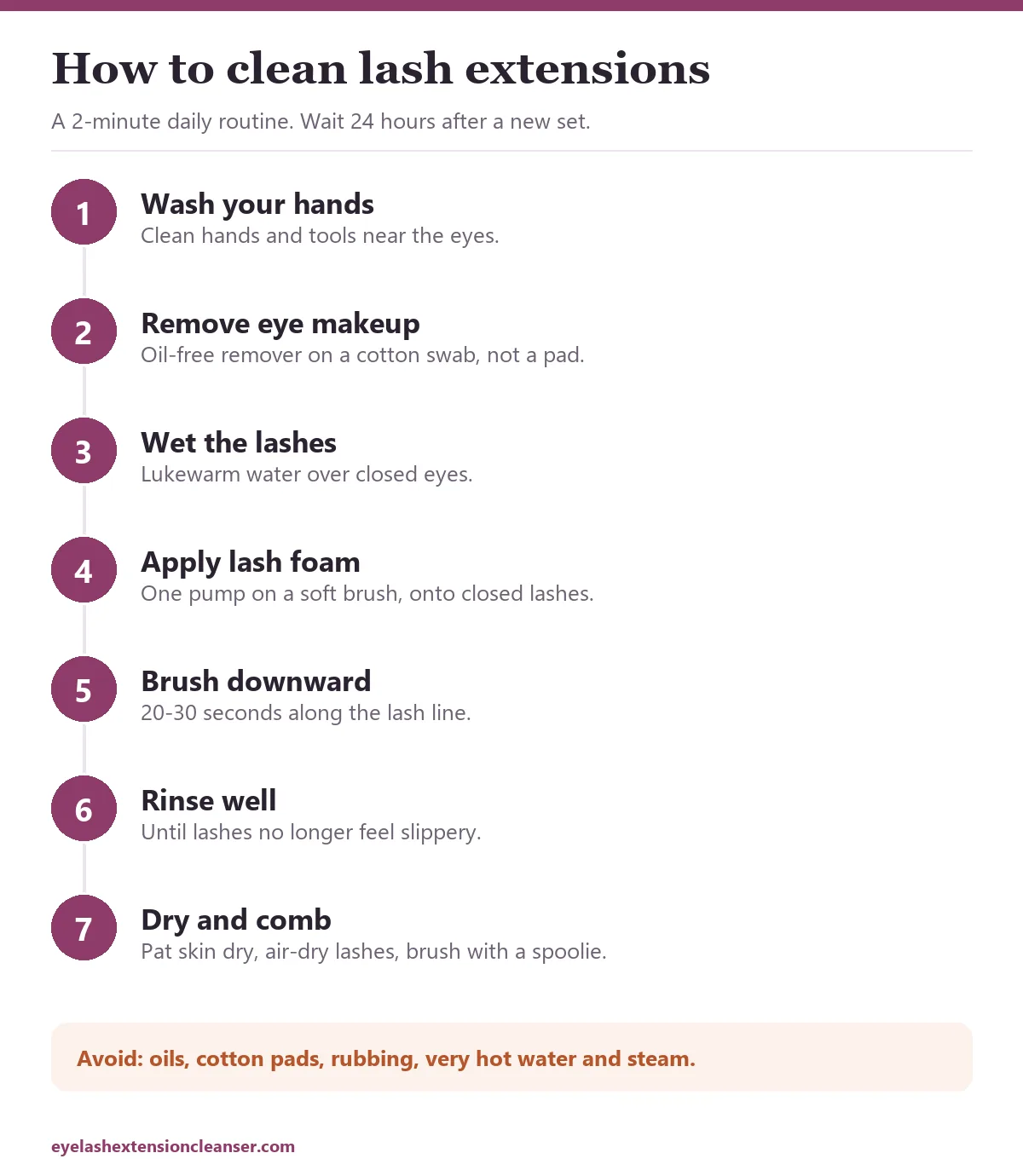
How to use a lash extension cleanser: the 7-step routine
- Wash your hands. The U.S. Food and Drug Administration recommends clean hands and clean tools for anything used near the eyes (FDA).
- Remove eye makeup first. Use an oil-free remover or single-phase micellar water on a cotton swab, working on the lid and around the lashes, not through them.
- Wet the lashes. Splash lukewarm water over closed eyes or use a gentle shower stream from below.
- Apply a pea-sized amount of lash foam to the brush or the back of your hand, then onto closed lashes.
- Brush downward for 20–30 seconds. Move the brush in small downward strokes along the lash line, where buildup collects. Do not scrub sideways across the lashes.
- Rinse thoroughly. Leftover cleanser can leave a film, so rinse until the lashes no longer feel slippery.
- Dry and comb. Pat the skin around the eye with a lint-free towel, let the lashes air-dry or use a cool hair-dryer setting at a distance, then brush through with a clean spoolie from the middle of the lashes outward (how to brush lash extensions).
Tip: Wash at night. It removes the day's makeup, sunscreen and oil before you lie on your lashes for eight hours.
How often to clean them
Regular cleaning is also your best protection against styes and pink eye.
- First 24 hours: keep lashes dry (what to avoid in the first 24 hours). Adhesive can take hours to fully set. EyeWiki notes some glues may take up to six hours to solidify completely (EyeWiki), and many lash artists suggest waiting a full day to be safe.
- After that: once a day is a good default. If you wear no makeup and have dry skin, every other day can be enough.
- Extra washes: after workouts, swimming, heavy sunscreen or a day of eye makeup.
| Your situation | How often to wash | Notes |
|---|---|---|
| New set (first 24 h) | Don't | Keep lashes dry while the glue sets |
| No makeup, dry skin | Every other day | Brush daily |
| Daily makeup or sunscreen | Every day, at night | Remove makeup first with an oil-free remover |
| Oily lids or skin | Every day | Oil at the lash line weakens bonds |
| Gym, swimming, sauna | After each session | Rinse salt, chlorine and sweat the same day |
| Crusty or itchy lash line | Every day, gently | See a doctor if it persists (itchy lash extensions) |
How to dry lash extensions
Drying is where many lashes are lost. Rubbing a towel over wet extensions tangles and pulls them.
- Pat, don't rub. Press a lint-free towel or tissue on the skin around the eye, not on the lashes.
- Let them air-dry, or use a hairdryer on the cool setting, held at arm's length and moving.
- Brush while nearly dry with a clean spoolie, from the middle of the lashes outward (how to brush). Lashes left to dry untouched often set in clumps (why lashes stick together).
- No hot air or heat close to the face. Heat can frizz synthetic fibres and soften fresh bonds.
Cleaning after makeup, sunscreen or the gym
- Makeup: remove eye makeup first with an oil-free remover or single-phase micellar water on a cotton swab, then do the full wash. Skip waterproof mascara entirely (mascara with extensions).
- Sunscreen: many sunscreens are oily. Keep them below the eye area and wash lashes the same evening.
- Gym and swimming: sweat, chlorine and salt leave residue. Rinse and wash the same day (swimming, saunas and workouts).
Cleaning around a sensitive lash line
If your lids are prone to crusting or flaking (sometimes a sign of lash extension mites), eye doctors often recommend lid hygiene: a warm compress followed by gentle cleaning at the base of the lashes (AAO). With extensions, keep the compress short and the water lukewarm, then use your lash cleanser rather than heavy scrubbing. If redness, swelling or pain lasts more than a day or two, see an eye doctor (and read why lash extensions itch). The American Academy of Ophthalmology advises against removing extensions or treating a reaction at home yourself (AAO).
Common mistakes that shorten lash life
- Using oily products. Oils and oil-containing removers are the most common reason lash artists give for early shedding. Read more in can you use an oil cleanser with extensions.
- Rubbing with cotton pads. Fibers catch on the bonds and pull lashes out.
- Skipping cleaning to "protect" lashes. Buildup at the base can irritate the lid and weaken the bond over time.
- Sleeping face-down. Friction bends and twists extensions. See our aftercare guide.
- Picking at loose lashes. Pulling a half-attached extension can take the natural lash with it.
Your tools need cleaning too: see how to clean a lash spoolie. If you are unsure whether your usual cleanser is enough, compare lash shampoo vs face wash, and if your lids get shiny by midday, read lash extensions and oily skin.
Cleaning extensions without lash shampoo
Run out of cleanser? Short-term options include a diluted, fragrance-free baby shampoo or an oil-free facial cleanser. Each has trade-offs, which we cover in how to clean eyelash extensions without a cleanser and baby shampoo for lash extensions.
Key takeaways: Wait a day, then wash daily with an oil-free cleanser and a soft brush, using downward strokes at the lash line. Rinse well, pat dry, comb with a clean spoolie, and avoid oils, cotton pads and rubbing.
Frequently asked questions
Should I wash my lash extensions every day?
Daily washing is a good default, especially if you wear makeup or sunscreen or have oily lids. If your skin is dry and you wear no makeup, every other day is usually enough. Never go several days without a wash.
When can I wash new lash extensions - 24 or 48 hours?
Most artists say 24 hours; some recommend 48 hours to be safe, especially for volume sets or humid climates. Follow your artist's advice. EyeWiki notes some glues take up to six hours to solidify completely.
Can I wash my lash extensions with face wash?
Only if it is oil-free, fragrance-free and has no exfoliating acids or retinoids. Otherwise, wash your face first and clean the lashes separately with a lash cleanser.
How should I dry lash extensions?
Pat the skin around your eyes with a lint-free towel, then let the lashes air-dry or use a hairdryer on the cool setting held at a distance. Brush them through with a clean spoolie while they're nearly dry. Never rub them with a towel or use hot air close to the face.
How often should I wash my eyelash extensions?
Most lash artists recommend a gentle wash once a day, or at least every other day, plus an extra rinse whenever you have worn eye makeup or sunscreen near the eyes. Skip washing for the first day after application so the adhesive can finish curing.
Can I clean lash extensions with just water?
Water alone rinses away dust but not the oil, sweat and skin cells that build up at the lash line. Use a lash-safe, oil-free cleanser for the actual wash and water only for rinsing.
Does washing make extensions fall out faster?
Gentle washing does not. Rubbing, tugging, cotton pads and oily products do. A clean lash line usually keeps extensions attached longer because oil and residue are not sitting on the bond.
What brush should I use?
A soft, fluffy cleansing brush (often sold as a lash shampoo brush) to apply foam, and a clean disposable spoolie to comb lashes once dry. Replace or wash the brush regularly.
Sources
- Eyelash Extension Facts and Safety — American Academy of Ophthalmology
- Eyelash Extensions (EyeWiki) — American Academy of Ophthalmology
- What Is Blepharitis? — American Academy of Ophthalmology
- Eyelid Cosmetic Enhancements and Their Associated Ocular Adverse Effects (Masud et al., 2019) — Medical Hypothesis, Discovery & Innovation in Ophthalmology
- Eye Cosmetic Safety — U.S. Food and Drug Administration