Itchy Lash Extensions: Allergy, Irritation or Lash Mites?
In this guide
See a doctor: Pain, significant swelling, discharge, light sensitivity or any change in vision needs an eye doctor promptly. Don't pull extensions off yourself; the American Academy of Ophthalmology advises against treating a reaction at home (AAO).
Quick answer: Itching that starts during or right after an appointment is often irritation from glue fumes or tape. Itching that starts hours to days later, with puffy lids, suggests an allergy to the adhesive. Itching weeks later, with crusts or gritty eyes, points to buildup, dry eye or blepharitis — sometimes from Demodex mites.
What the research says
Allergic and irritant reactions are the most commonly reported problems with extensions:
- In a Japanese study of 107 patients, 64 had keratoconjunctivitis linked to glue or removers and 42 had allergic blepharitis from glue; formaldehyde above the standard threshold was found in all three glues analyzed. All patients recovered with eye drops or ointments (Amano et al., 2012).
- A review of published cases found allergic blepharitis was the most common complication (about 79%), and cites a study in which itching affected 45.8% of people reporting side effects (Masud et al., 2019).
- A small study presented at the 2026 ESCRS congress found most young women with extensions carried Demodex mites, and many had eye irritation and meibomian gland problems; the authors note there was no comparison group (News-Medical report).
Can you be allergic to lash extensions?
Yes. The extensions themselves are synthetic fibres, but the adhesive is a common allergen. Most lash glues are cyanoacrylate-based, and allergic blepharitis is the most frequently reported complication of extensions in the medical literature (Masud et al., 2019). An allergy can develop after several uneventful sets, and reactions often get stronger with each exposure.
| Irritation | Allergy | |
|---|---|---|
| When it starts | During or soon after application | Hours to a few days later |
| Main feeling | Stinging, watering | Itching, puffiness |
| Lids | Usually normal | Red, swollen, sometimes both eyes |
| Course | Settles within a day | Lasts or worsens until treated |
| Next time | May not recur | Likely to recur, often worse |
Match the timing to the cause
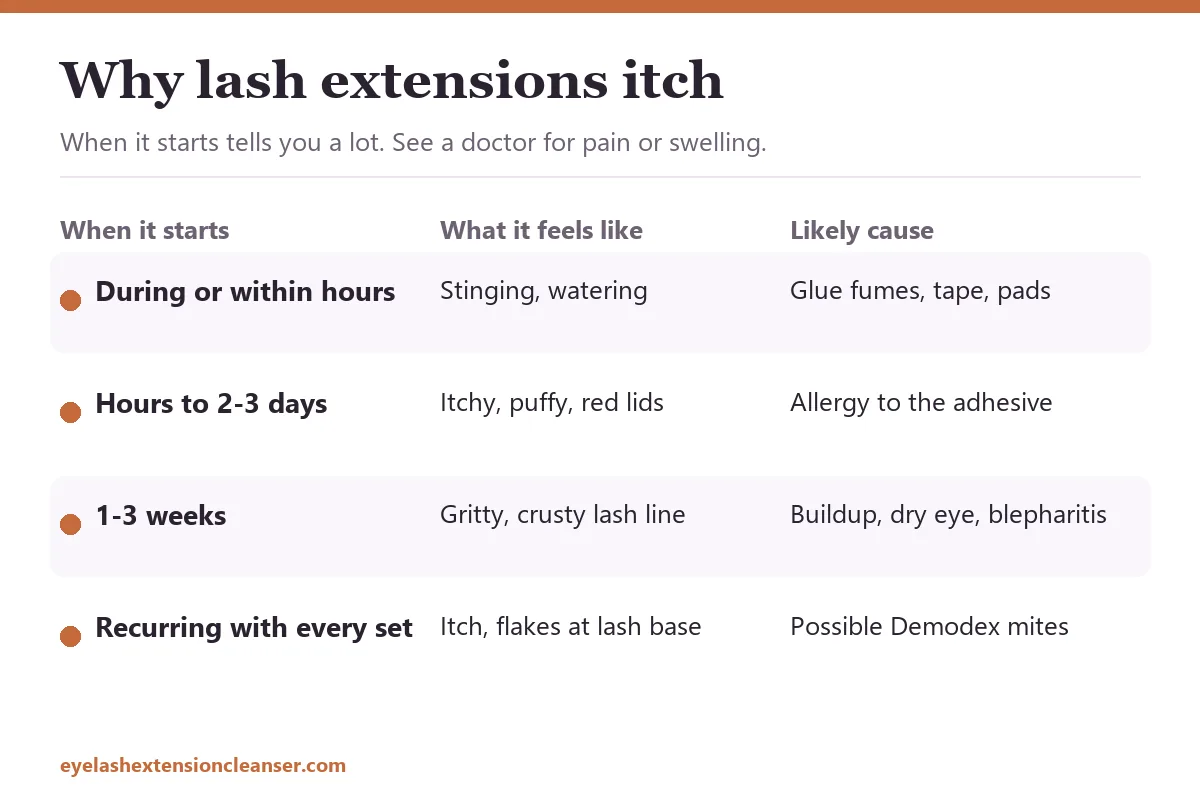
| When it starts | What it feels like | Likely cause | What to do |
|---|---|---|---|
| During or within hours | Stinging, watering, red whites of the eye | Fumes from the glue, tape or pad irritation | Lubricating drops; see a doctor if it doesn't settle in a day |
| Hours to 2–3 days later | Itchy, puffy, red lids; may worsen | Allergy to adhesive (often cyanoacrylate) | See an eye doctor; arrange professional removal |
| 1–3 weeks later | Gritty, itchy lash line, crusts | Buildup, dry eye, blepharitis | Improve daily cleaning; see a doctor if persistent |
| Weeks, recurring with every set | Itchy lash line, flakes, "cylindrical" dandruff at lash base | Possible Demodex blepharitis (lash extension mites) | Eye exam; treatment is available |
EyeWiki notes that allergic reactions may appear hours to days after application and that treatment can include antihistamine drops or tablets, or antibiotic or steroid drops, depending on the diagnosis (EyeWiki). For irritation from glue fumes, it suggests over-the-counter lubricating drops and notes antibiotics are generally not helpful.
Things you can do now
If it hurts rather than itches, see why do my lash extensions hurt?
- Don't rub. It worsens inflammation and pulls out lashes (why lash extensions fall out).
- Cool compress over closed eyes for a few minutes can ease itching.
- Lubricating (artificial tear) drops may help irritation.
- Clean the lash line gently with an oil-free cleanser — how to clean extensions. For crusts, eye doctors recommend lid hygiene at the base of the lashes (AAO).
- Book professional removal if you suspect an allergy (don't do it yourself: removing extensions at home).
- See an eye doctor if symptoms are moderate, worsening or last more than a day or two.
Burning or gritty eyes without much itching can point to dryness rather than allergy; see lash extensions and dry eye.
Preventing it next time
- Ask your salon for the adhesive's ingredient list and a patch test before a full set (more in lash extensions for sensitive eyes). For your own products, use oil-free, fragrance-free cleansers (AAO).
- Ask about "sensitive" adhesives, but understand that most still contain cyanoacrylate (what's in lash glue).
- Keep your eyes fully closed during application and ask for good ventilation.
- If you reacted once, a reaction can happen again — and may be stronger.
- Keep the lash line clean every day; buildup feeds bacteria and mites and raises the risk of styes and pink eye. A gentle foam cleanser and our aftercare routine make this easy.
Key takeaways: Timing tells you a lot: early stinging is often fumes, delayed swelling suggests allergy, and late itching points to buildup or blepharitis. Clean gently, don't rub, and see an eye doctor for swelling, pain or anything that doesn't settle.
Frequently asked questions
Is it normal for lash extensions to itch?
Mild irritation in the first day can happen, often from adhesive fumes or eyelid tape. Itching with swelling, redness or pain, or itching that starts days later and gets worse, is not normal and should be checked by an eye doctor.
Why do my lash extensions itch after 2 days?
A delayed onset is typical of an allergic reaction to the adhesive, which can appear hours to days after application. Cyanoacrylate glues and formaldehyde they can release are the usual suspects.
Why do my lash extensions itch after a few weeks?
Late itching is often linked to buildup at the lash line, dry eye or blepharitis, including blepharitis caused by Demodex mites. Better cleaning helps, but persistent symptoms need an eye exam.
Should I remove my extensions if they itch?
Don't pull them off yourself. Contact your lash artist for professional removal and see an eye doctor if you have swelling, pain or vision changes.
Can I use antihistamine eye drops?
Ask a pharmacist or doctor first. EyeWiki lists antihistamine drops among possible treatments for allergic reactions, but the right treatment depends on the cause.
Sources
- Ocular disorders due to eyelash extensions (Amano et al., 2012) — Cornea
- Eyelid Cosmetic Enhancements and Their Associated Ocular Adverse Effects (Masud et al., 2019) — Medical Hypothesis, Discovery & Innovation in Ophthalmology
- Eyelash Extensions (EyeWiki) — American Academy of Ophthalmology
- Eyelash Extension Facts and Safety — American Academy of Ophthalmology
- How do I soothe eyes after an allergic reaction to eyelash extensions? — American Academy of Ophthalmology
- Study links eyelash extensions to skin mites, eye irritation and blocked glands — News-Medical (ESCRS 2026 congress report)
- What Is Blepharitis? — American Academy of Ophthalmology